

Understanding sheet metal fabrication manufacturing terms helps you work with your sheet metal fabrication specialist to get the best results from your project. Knowing every step of the process to manufacture your sheet metal product helps you get the best outcomes from the prototyping and manufacturing of your design.
Sheet Metal Fabrication Cutting, Forming & Finishing Terms
Understanding the cutting, forming, assembly and finishing terms used in sheet metal fabrication allows you to communicate your requirements clearly, evaluate supplier capabilities accurately, and make better decisions at every stage of the process. Once we have decided on the grade and gauge of sheet metal that is suitable for our project, and made any changes that optimize design for manufacturability, your sheet metal fabricator can start on the sheet metal cutting, forming, assembly and finishing stages that will complete your project.
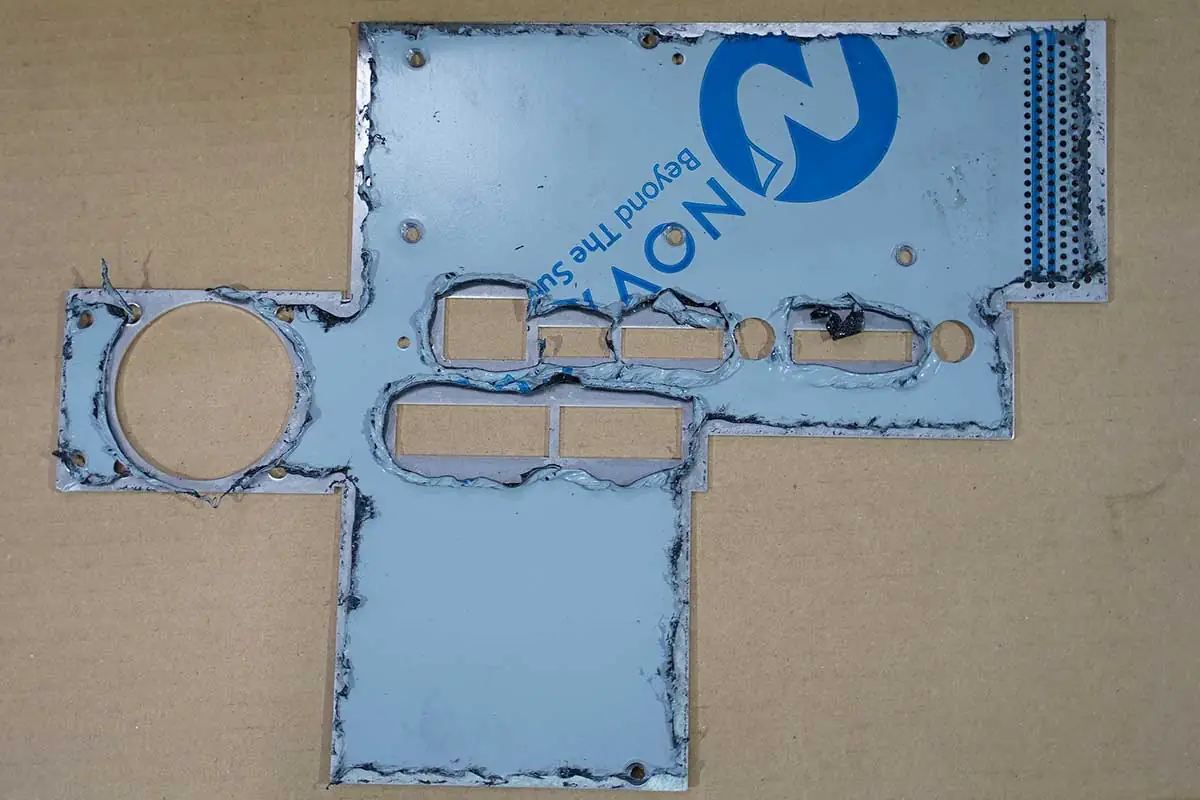
Laser cutting the sheet metal blank
We start by laser cutting a blank from a standard sheet of metal of the correct grade and gauge, this process is called blanking. Our enclosure starts as an L-shaped (as you can see in the example image above), T-shaped or cross-shaped blank that will then be folded into the final box shape. This avoids having to make a box out of multiple panels that are joined together.
Laser cutting is the standard cutting method used for modern precision fabrication. The laser generates extremely accurate cuts and the cutting is computer controlled to exactly match the design specifications. For our sheet metal enclosure, laser cutting produces the flat blank that will be formed to make the enclosure and cuts ventilation slots, openings for cable glands and the shapes for internal brackets and framing in a single operation.
Taiwa uses Japanese AMADA laser punch-cutting combination machines, which gives us the ability to make precisely positioned holes for connectors and mounting points without having to reposition the sheet. This saves time and ensures accurate assembly.
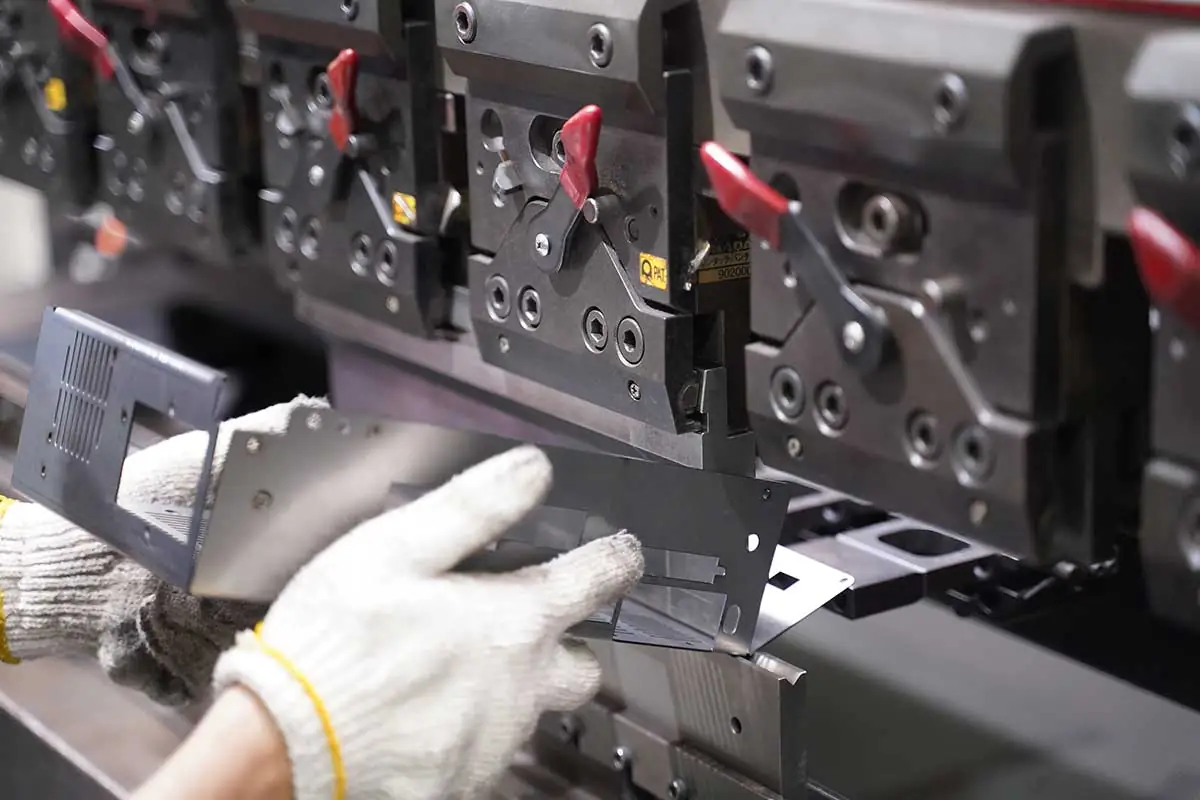
Bending & forming the laser cut blank into shape
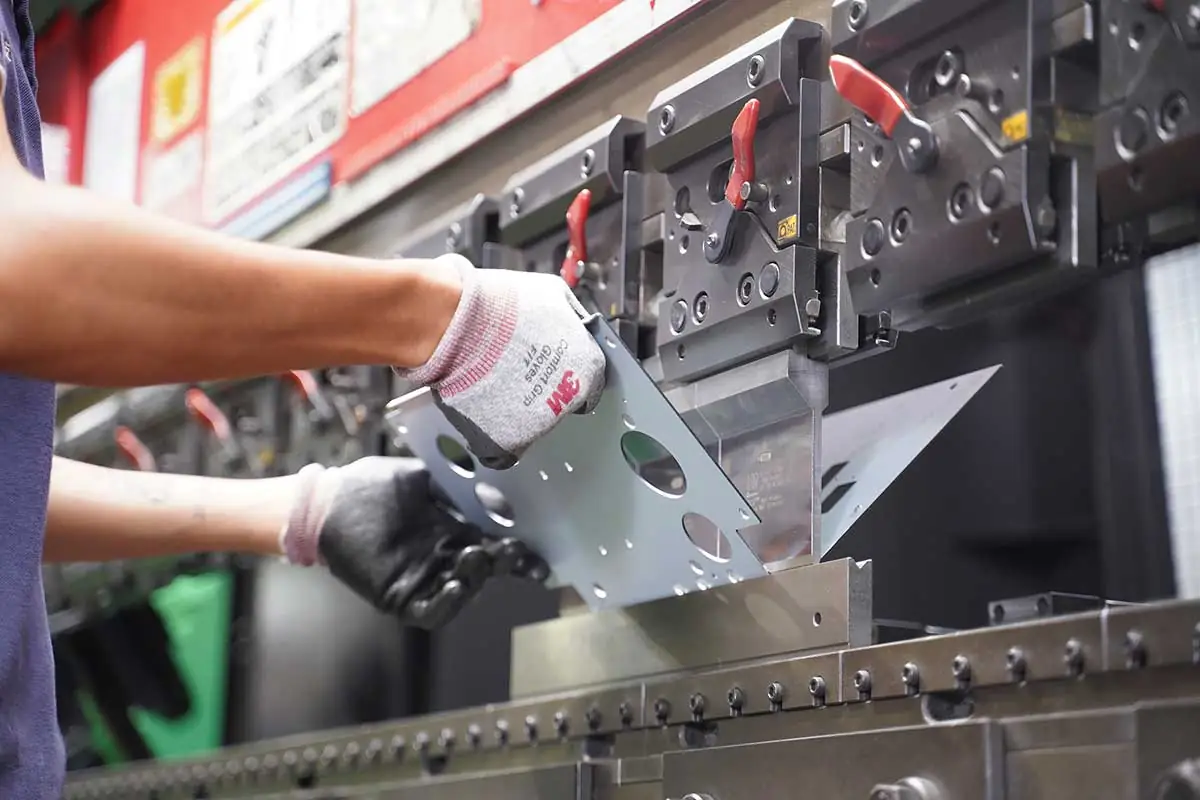
Bending uses a press brake machine to apply precise force along a straight line, bending the metal against tool steel profiles. This folds the metal along the line to achieve the angles specified in the design. We use this method to make the 90-degree bends in the sheet metal blank that form the sides and top of an electrical enclosure. Bend radius is the term for the internal curvature of the bend. If the radius is very small it can crack or stress the material. Minimum bend radii are defined by the elongation characteristics of the sheet metal grade we are using.
Bending accuracy is defined by tolerances & is affected by springback
Tolerances define the acceptable range of variation in a dimension. A tolerance of ±0.2mm on a bend position means the edge of the sheet afer bending may be 0.2mm from its target location and still be within specification. Bending tolerances are also described in terms of how close the angle of the bend has to be to the specification, which is typically +/-0.5° to +/-1°.
Springback is how metals resist being bent into shape by tending to return slightly toward its original flat state after bending. Sheet metal fabricators compensate for springback by over-bending slightly, so the final resting angle is within specification. Taiwa uses computer controlled AMADA press brakes that calculate the exact overbend required based on the gauge and grade of sheet metal being used, the result is unbeatable precision that simplifies joining and assembly of the finished product.
Joining & Assembly Methods
When the desired shape of components has been achieved by cutting and bending, the fabrication process moves to joining parts together and installing hardware . Joining and assembly creates the final structural shape of the finished product, and can be achieved in several ways. A very simple joining method is the quarter turn lock, where a tab that has been cut in the metal blank is inserted through a slot and a quarter turn deforms it and locks the pieces together. .
Welding is a standard joining method for structural sheet metal fabrication. Welding uses heat to fuse metal parts together, creating a continuous, strong joint. For stainless steel, Tungsten Inert Gas (TIG) welding is the preferred method, as it produces clean, precise welds with minimal heat distortion. Accurate welding relies on cutting and bending that achieves very tight tolerances, with minimal gaps when the metal parts are placed together for welding.
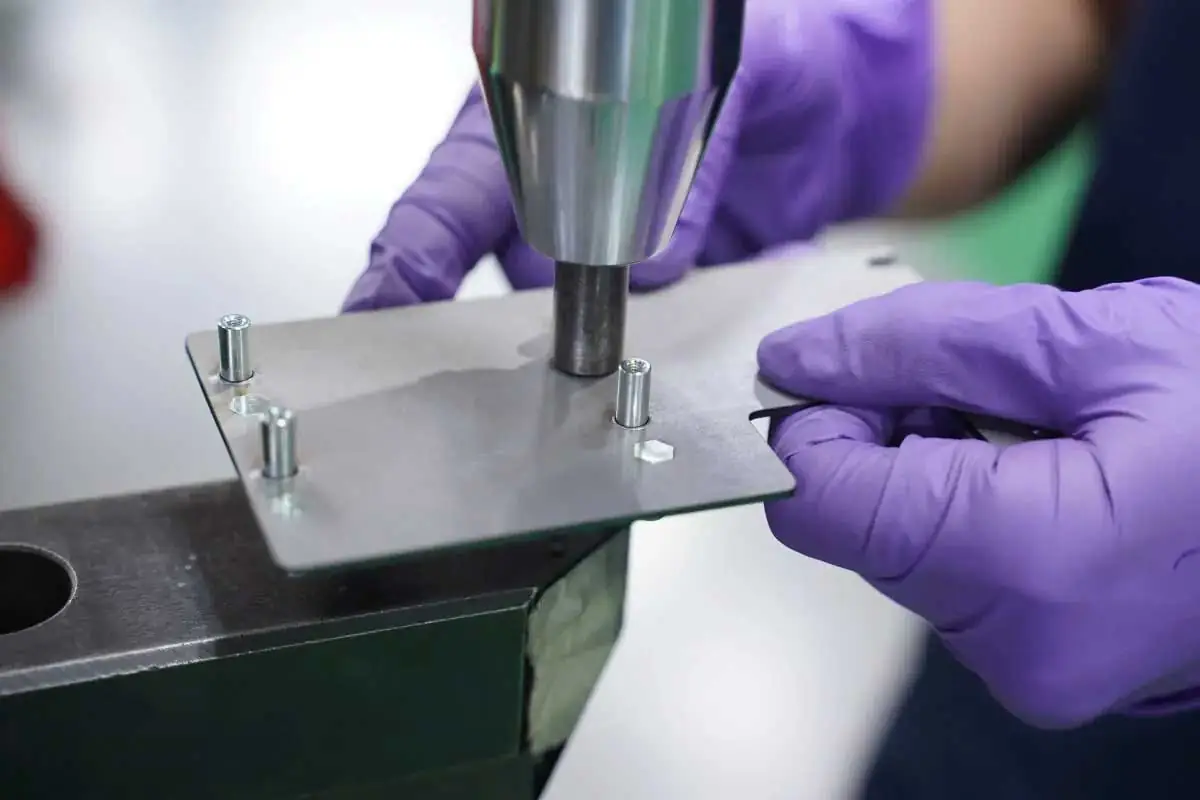
Hardware insertion is the fitting of fastenings and functional hardware directly into the sheet metal. For a sheet metal electronics enclosure these are often press-fit PEM nuts for thin materials. PEM nuts are threaded inserts pressed into pre-punched holes to provide strong screw threads. Threaded barrels can also be riveted into sheet metal to enable the use of bolts to attach internal components and to mount PCBs.
Riveting uses aluminium or steel rivets to join components as an alternative to welding. It is commonly used for attaching internal rails or mounting brackets, but can be used for connecting larger structural components.
Assembly is the final stage of bringing all fabricated components together into a complete unit, and includes quality checks to ensure that there are consistent panel gaps, that seals and fitting are correctly installed and to verify that the completed design is dimensionally accurate.
Sheet metal surface finishing & quality control
There are a wide range of sheet metal surface finishing processes and options, some of these are for safety and improving user experience by removing sharp edges. Surface finishes provide opportunities to protect against corrosion and also can be decorative, to display brand logos or other information. When specifying your sheet metal fabrication project, you will also need to discuss with your fabricator which of these options you may want to include.
Deburring is used to remove sharp edges and burrs left by cutting and forming operations. It is both a safety requirement and a quality standard. Laser cutting gives very clean edges, but may still require deburring to make the edges less sharp.
Powder coating is a coating process in which electrostatically charged paint particles are applied to the metal surface and then cured in an oven. It produces a durable, even finish that is more resistant to chipping, scratching, and UV degradation than standard paint finishes.
Paint and powder coating color is often stated using the RAL standard. For example, RAL 7016 Anthracite Grey. RAL is a standardised European colour matching system for paints that is used globally to ensure colour consistency between orders and manufacturers.
IP rating is a standard classification of ingress protection, which specifies what environmental conditions your sheet metal product can reliably be used in without damage to what is inside it. IP ratings are described in terms of levels of resistance to dust and water getting into the enclosure. IP54 might be a good standard for an electronic enclosure, and specifies dust protection as well as protection from water splashes.
Quality control measures
Visual inspection and dimensional measurement using calipers are standard quality control checks. Where high precision and reliability is required, a Coordinate Measurement Machine (CMM) enables high precision checking of three-dimensional accuracy of fabricated parts against the original CAD model.With finishing complete and precision and quality checks passed, our sheet metal product is ready for delivery.
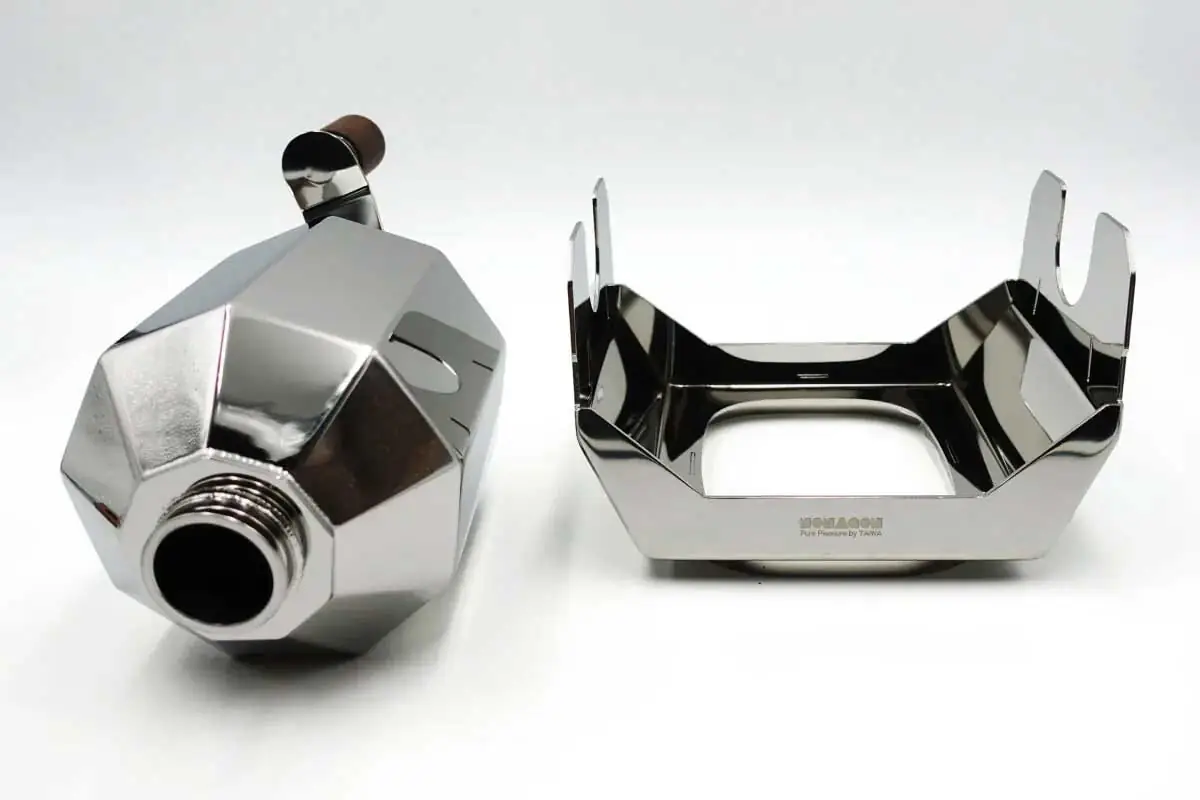
Taiwa has the expertise & experience to make your sheet metal project a success
Taiwa’s extensive experience with in-house development of both OEM and ODM sheet metal projects. Expert engineering and use of high quality sheet metal fabrication technology enable us to manufacture any sheet metal product to your exact requirements. Contact us to discover how Taiwa OEM & ODM sheet metal fabrication services are the perfect choice for your next sheet metal fabrication project.